Context
Regainig control over the platform
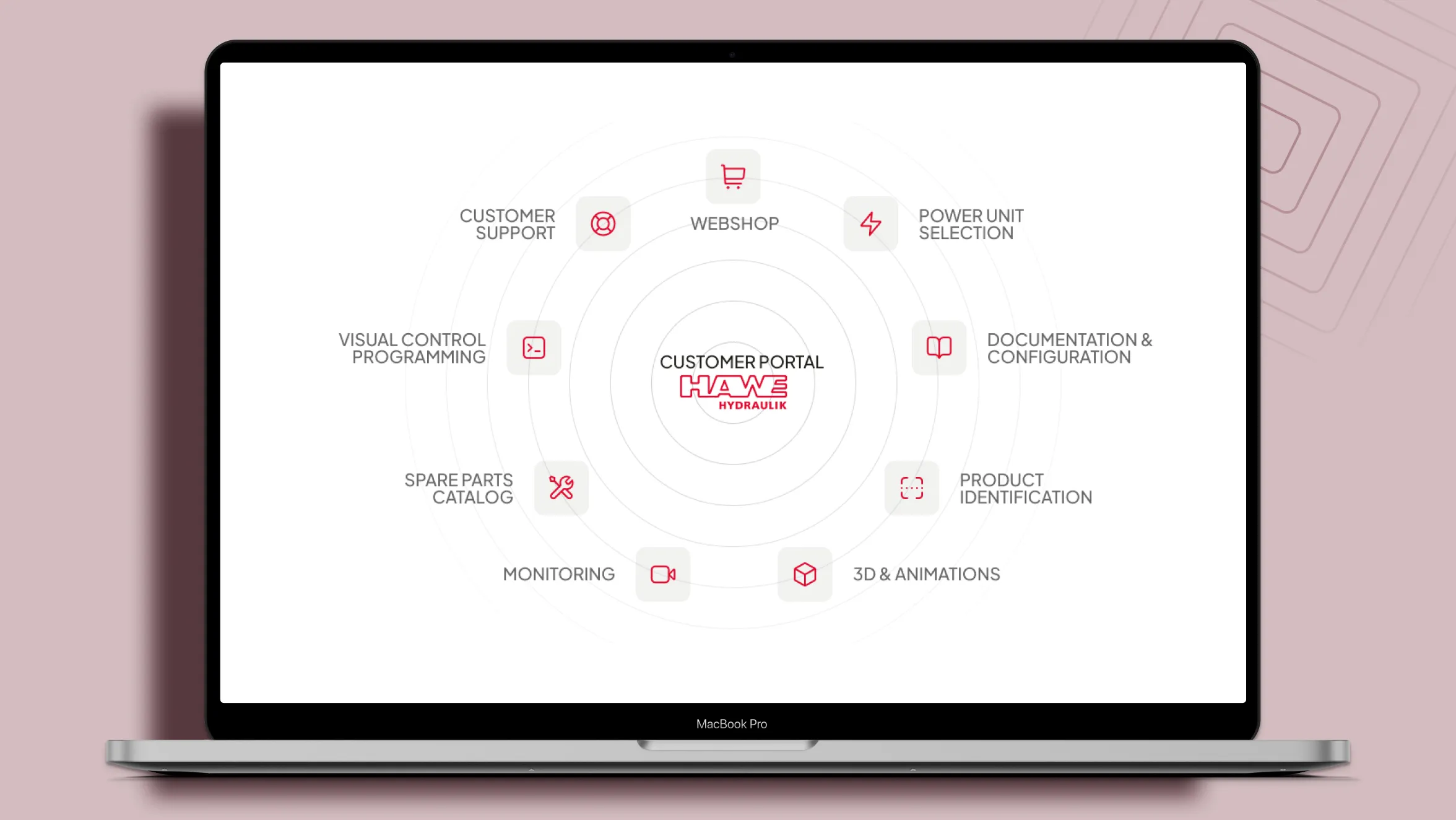
Hawe's Customer Portal served over 12,000 registered customers and multiple internal teams. It had been built incrementally. Different tools made by different agencies, different interpretations of the same design manual.
The result was a platform that worked, but felt fragmented. There was no shared definition of what quality meant in a digital product. There was no structure to make any definition stick. My job, as I understood it from the start, was to help build that definition and make it useful.
Goals for the platform:
Lower entry
barriersUnify look & feel across tools to reduce cognitive load, helping users engage faster, convert sooner and stick around for longer.
Improve
usabilityClear navigation and intuitive user journey encourage users to explore our products and quides smoothly towards requesting a quote.
Attract new distributors to the platform
A well-designed platform is a powerful tool for attracting new partners.
The Approach
Understand the room before you try to influence it
When I first joined to help with Customer Portal, it felt like UX wasn’t really on anyone’s radar. It was a large, politically complex initiative that involved multiple teams with competing ownership. Before I could do anything useful, I needed to understand who held what, what had been tried before, and where the genuine openings were.
14 stakeholder interviews
I introduced myself across departments as a way of establishing my presence in the organization. I came with questions about what problems people had quietly given up on solving. The goal was to build a map of problems, priorities, and relationships to figure out a path forward.
My research showed that design chaos was visibly driving up development costs. Sales reps were frustrated by a portal that forced them to juggle multiple tabs. Almost everyone recognized the need for better UX. But nobody had a clear owner for it.
Low hanging fruits
The company wasn't ready for a large overhaul redesign. To find my footing, I ran a heuristic evaluation of the portal and identified quick wins. Shipping these changes should be fast but visible enough to demonstrate what design could do.
Clearer navigation headers, consistent iconography, streamlined flows. Not transformative. But they improved product in noticeable ways and gave me something to point to when making the case for a more systematic approach.
Momentum
An introduction that changed my position
Several months in, advocating for consistency, a team I had no previous contact with reached out to me directly. An innovation manager had heard about my work and wanted to involve me in shaping and validating a new product idea.
Working across two teams, Customer Centricity and Product Tools, I designed and launched Hawe's first digital cartridge selection tool. Leading this product design was where I learned the most — about product strategy, technical constraints, and what it actually means to connect a design decision to a business result.
Structure
Turning informal practice into something durable
My main fear was that what I worked on in Customer Centricity team would never leave the confinement of that team. Being invited to work with another team opened the doors for me to spread our work across the company.
Weekly UX syncs
Working across teams, on multiple products at once created a lot of friction. We needed a space to discuss and share our discoveries across team boundaries. Together with the Product Tools manager, we shifted our weekly status updates into ux syncs that anyone could join.
Within first month, these meetings had produced their first concrete output. A customer feedback survey was scoped and initiated, aimed at gathering input from external users we'd had no structured way to reach before.
A lightweight usability scorecard
Together with my development colleague, I introduced a simple rubric for tracking usability improvements during testing. A small number of signals tracked consistently: reduction in known issues, qualitative feedback on improved flows, task completion changes. It stayed within our team used as a design tool.
The design system as connective tissue
Running in parallel to all of this was the design system. It was a component library and governance model that eventually covered 6+ products, including tools built by engineers outside the design team. It gave other people a way to participate in design consistency without routing everything through me.
Results
What actually changed
The most meaningful outcomes here are behavioral ones. I am incredibly proud that my work influenced where design sat in the process of making product decisions.
Design entered
conversation earlierPreviously, design was outsourced to engineers building the application. Now, teams started involving it at the beginning to validate decisions.
The Cartridge Tool proved internally that design has value
Business value of reduced development costs, saved time on revisiting decisions, anticipating and solving problems before they come up in development.
A standing
cross-team ritualWeekly syncs I suggested and facilitated became something teams appreciated. By the time I left, it was running without me. The customer feedback survey it seeded was already in scope.
Design system adoption reached 6+ products
Including engineers outside the design team using it independently. Adoption was gradual — but the infrastructure was there to grow, and the dependency on me to enforce consistency had disappeared.
Stakeholder confidence
shifted visiblyMockups and prototypes became the expected starting point for new feature conversations. The external dev team reported that design specs were saving them significant time during implementation by reducing the back-and-forth.
Lessons learned
What I carried out of this experience
Reading organization is a design skill
Understanding who owns what, where decisions actually get made, and what problems people have quietly given up on is golden knowledge. It's essential information for doing design work that lands.
Trade-off conversations are where influence lives
The most useful moments weren't the design reviews. They were the conversations where a scope decision was being made. Being useful in these conversations was the work I'm most proud of from this period.
Change that lasts needs structure and alignment
Energy and relationships can move things forward, but they don't compound without structure. The syncs, the scorecard, the design system — each was an attempt to make the work useful for everyone.
Measure earlier,
even informallyWe had no baseline for most of what we changed. Starting measurement conversations in discovery would have made it significantly easier to demonstrate progress in terms stakeholders could act on.
The product layer was what I wanted to grow into
The work I found most energizing in this role was sitting close to product decisions — advising on scope, shaping trade-offs, understanding the business logic behind a brief. I followed that pull. I completed PSPO and PSM certifications. Not to become a Product Owner, but to understand that layer of thinking and bring it into how I work as a designer.
Reach out
Let’s talk UX evolution
This role gave me a clear picture of where I want to grow: closer to the product strategy layer, in an environment where design already has credibility and I can focus on using it well rather than establishing it from scratch.
I'm at my best when I'm connecting user insight to product decisions — sitting close enough to strategy to influence scope and direction, while staying grounded in the craft that makes those decisions real.
If you're building something where design thinking and product strategy need to work hand in hand, I'd like to hear about it.